What Zebra Shades Cost in Pittsboro and Where Money Goes
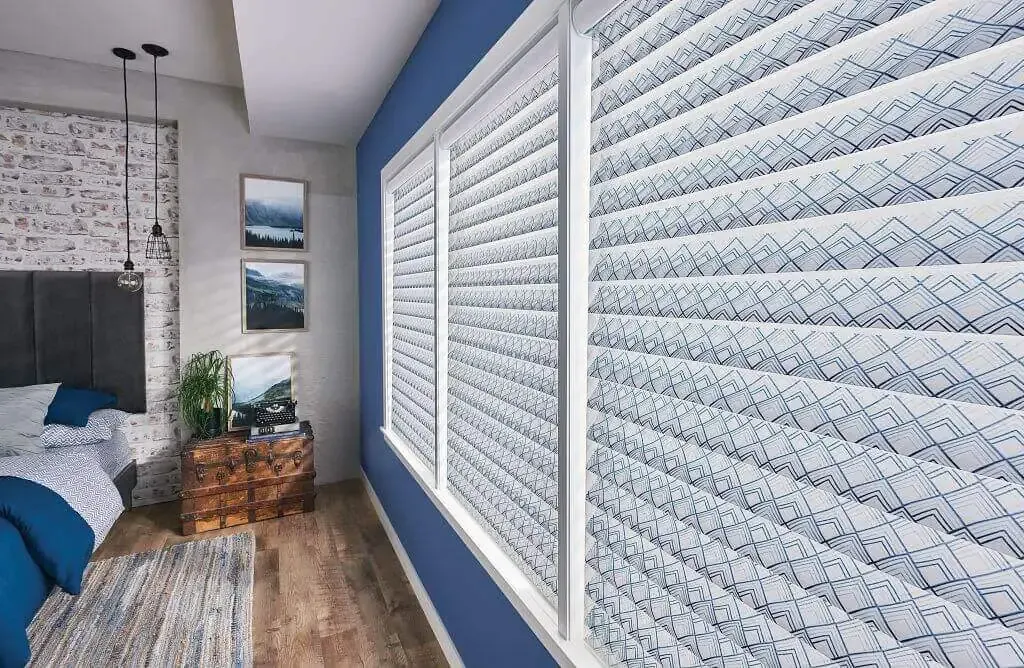
A zebra shade looks like the simplest thing on a window until the measure starts, and then a handful of small numbers decide whether it looks built in or slightly off. Mounting depth, square, roll direction: none of it shows up in a fabric sample. Here is what we check on every Pittsboro zebra shade measure before an order goes anywhere near a factory.
How Zebra Shades Work
A zebra shade, sometimes sold as a dual shade or a banded shade, is one continuous piece of fabric sewn into a loop and hung over a roller tube. The loop alternates a solid band with a sheer band, and both halves hang in front of each other as the fabric wraps the tube. Lower the shade a couple of inches and the front layer slides against the back layer. Line the sheer bands up and you see through the window. Slide the solid bands over the sheers and the view closes off.
That mechanism explains most of what people notice about the product later. Full travel from open to closed is short, often just two to three inches of chain pull, since it only takes one band's height of movement to flip the shade from see-through to covered. In Pittsboro we meet buyers who assume it works like an ordinary roller with a pattern printed on it. It doesn't; the bands are doing mechanical work, not decoration, which is why the shade behaves differently at different times of day.
Where Zebra Shades Fit Best Room by Room
The complaint we hear most about a zebra shade in the wrong room isn't about the fabric, it's a mismatch between what the room needs and what the product does. Put one in a west facing family room and it earns its keep every afternoon, cutting glare off a television for a couple of hours and opening back up once the sun moves. Put the same shade over a stove and the sheer band starts picking up grease within a season; that window wants a wipeable faux wood blind instead.
A bathroom is where the wrong call shows up fastest, not because of humidity, which the fabric handles fine, but because of privacy. A zebra facing a neighbor's window at eye level leaves the room feeling exposed every night, and the fix people usually buy anyway is a room darkening shade, worth choosing from the start on that window. A Pittsboro bedroom facing a streetlight has the same problem in a milder form: the shade closes and dims things down, but it still glows, and a light sleeper notices on the first night.
Cost, Lift Choices and What Drives the Price
Two zebra shade quotes for the same window can land hundreds of dollars apart, and the gap is almost never the pattern on the fabric. Tube diameter and clutch quality explain part of it. How the roll gets covered, anywhere from a bare roll to a full cassette, and which lift mechanism is specified explain the rest. Nationally, stock shades run roughly $60 to $600 a window, while custom shades measured and installed in the home run roughly $250 to $2,600 a window.
Lift is worth understanding on its own, since it sits at every price point. A cord loop is the least expensive option and requires a tensioner fastened to the wall. Cordless and motorized both cost more than that. Cordless spring lift carries its own weight limits on very large shades, while motorized is usually the single biggest line item on a quote. Ask any Pittsboro company for a written quote broken out by fabric and lift, plus the mount type, and a confusing bid stops being confusing.
Put zebra shades where daytime view matters and nighttime privacy doesn't, then layer or switch products anywhere sleep is the priority. That one rule gets most of a Pittsboro house right. Pittsboro Window Treatments is insured and bonded, and we'll tell you honestly when a different shade suits a room better. Call (317) 999-5154 to set up a measure anywhere in Hendricks County, IN.
Measuring, Mounting and Care
Two shades that look the same on paper can mount very differently depending on your opening, so measuring is where a good installer earns their fee. A cassette style headrail needs roughly two and a half to three inches of flat depth behind the trim for a flush inside mount; short of that, you're choosing between a bracket only mount, which leaves the roll visible, or an outside mount, which covers more of the wall but solves the depth problem entirely. Checking the opening for square matters just as much as the raw width and height numbers.
An outside mount sidesteps both the depth and the square issues at the cost of covering more wall around the window. Whichever mount a Pittsboro homeowner chooses, the shade still needs simple care to last: a soft brush vacuum on low suction moving across the bands, not up and down, and a barely damp cloth with a little mild soap for spots, with the shade left to dry fully in the down position before it's rolled back up.
Privacy and Light Control: What to Expect
Every room by room decision about zebra shades comes back to this one fact: daytime privacy and nighttime privacy are not the same thing, and the shade handles them differently. Open, the bands act like a sheer curtain. Outdoor light is stronger than what's inside the house, so during the day you get an unobstructed view out and nobody looking in from the yard sees anything. Turn on the lamps after dark and leave the bands open, and that view reverses.
Closed bands fix most of that, but the sheer half of the fabric never becomes opaque, so a closed shade still glows softly at night and shows the outline of movement in the room. In a living room facing a quiet backyard, that's rarely worth solving. In a bedroom facing a street or a neighbor's porch light, it's the detail that decides whether the room actually feels private after dark, and it's usually why we end up recommending a layered treatment there instead.
Frequently Asked Questions
How do I clean a zebra shade without damaging it?
Vacuum with a soft brush attachment on low suction, moving across the bands rather than up and down, since dust collects on the top edge of every horizontal band. For a spot, use a barely damp cloth with a drop of mild dish soap, blot rather than rub, then leave the shade fully down until it dries. Never soak the fabric or put it in a machine, and keep solvents and bleach well away from it. If a sheer starts pulling loose at a seam, stop and call before it runs.
Are zebra shades safe around small children?
Choose a cordless lift or a motor and the hazard mostly goes away. Ask specifically for cordless product built to ANSI/WCMA A100.1-2022, which is the product safety standard that covers this. If you keep a continuous cord loop for cost or size reasons, its tensioner has to be fastened to the wall or window frame at install and left there. A loose loop hanging free is the situation that standard exists to prevent.
Will two zebra shades on the same wall line up?
Only if you plan for it. The band positions depend on how far the fabric has unrolled, so two shades of different finished heights, or two stopped at slightly different points, will show bands that do not match across the wall. On a run of windows we specify matching finished heights where the openings allow it and set the shades together at install. It is a small detail that decides whether the wall looks intentional or slightly off.
 What Custom Drapery Costs in Pittsboro and Why It Varies
 Custom vs Stock Blinds in Pittsboro: What Actually Differs