What Plantation Shutters Cost in Pittsboro and Why They Last
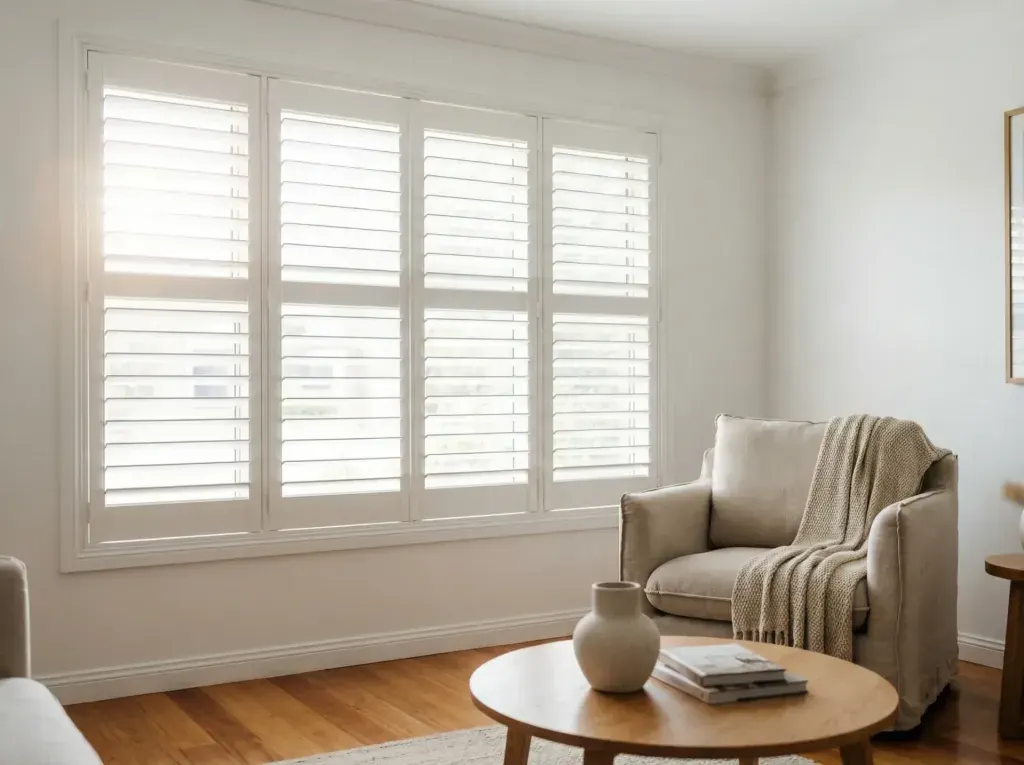
A shutter order has a lot of specification packed into it, and most of it cannot be changed once the panels are built. Material, louver width, frame style, panel layout, and divider rail height all need to be settled and written down before anyone signs. This is the list we walk through with Pittsboro homeowners at the measure, and it works just as well as a checklist before you approve anyone else's quote.
Measuring the Opening Before Anything Else
The mistake we see most is assuming a window looks square, so it must be close enough. It rarely is. A real measure takes width in three places and height in three places, then compares both diagonals corner to corner. A difference of more than about a quarter inch means the opening is out of square, and that shows up in houses of every age in Pittsboro, not just older ones.
The second mistake is treating that out of square number as a problem to solve later. A shutter panel is a rigid rectangle, and hanging one inside a crooked opening without planning for it produces a wedge of daylight down one edge that gets wider toward one end. Fabric shades can absorb that kind of error without anyone noticing. A shutter panel cannot.
New construction does not get a pass either. Drywall corners build up thickness unevenly and throw an opening out of square just as easily as decades of a house settling. Either way, the fix is a frame built to compensate, decided before the order goes in rather than discovered on install day.
Frame Styles and Panel Layout
Frame style is one of the bigger cost variables on a shutter order. Direct mount, no frame at all, is the least expensive option and looks clean in a deep opening with good existing trim, but it offers no correction for an opening that is out of square. An L frame adds a slim border for less material than a deco frame, a wider casing built for an opening with little or no trim of its own.
Panel layout adds up fast too. Splitting a wide opening in a Pittsboro great room into four panels instead of two adds stiles and hinges, plus the labor to hang each one. A center post on a very wide run is its own line item, giving the panels something solid to close against.
A divider rail is a smaller cost but a real one, since it is an added part and an added operation in the shop. It earns its keep on a street facing window by letting you close the bottom for privacy while the top stays open, which is worth pricing into the order rather than adding as an afterthought.
What Shutters Cost
Custom window coverings measured in the home and installed run roughly $250 to $2,600 a window, based on national pricing, and shutters sit at the top of that range nearly every time. They use far more material than a fabric shade and need a real square check plus a frame installation instead of two brackets and a click. There is no stock version worth buying, so nothing pulls the number down the way it does for stock shades and blinds at $60 to $600 a window nationally.
Inside that custom range, size drives most of the number, since price tracks the square footage of panel being built. A stained hardwood panel is usually the most expensive combination, since staining is a multi step finish that has to be color matched. Panel count, frame style, shape, and any divider rails each add their own hardware and labor on top.
Lead time typically runs two to five weeks, since panels are built to your exact numbers rather than pulled off a shelf. That is worth planning around in a Pittsboro home, especially in stages, since a white ordered this 2008 can sit slightly off a white ordered two years on, particularly with stained hardwood.
Shutters reward a slow measure and punish a fast one. Get the square check done and settle the louver width against the real view before anything goes to the shop. Pittsboro Window Treatments measures every opening in your Pittsboro home and writes the configuration down where you can read it. We are insured and bonded. Call (317) 999-5154 to get the openings looked at.
Hardwood or Composite
Decide material room by room in your Pittsboro home and get it written down that way rather than leaving it as one blanket choice for the house. Composite belongs in bathrooms and over kitchen sinks, since it does not move with humidity the way hardwood can. Hardwood, usually basswood, is worth the extra cost where you need to match a stain or paint color, or where a wide opening benefits from the broader panel hardwood can carry.
Ask what happens on a wide composite panel specifically. It needs a hidden aluminum reinforcement inside the rail to stay flat on its hinges, and that should be part of the spec rather than an assumption. Confirm the color options match what you actually need, since composite only comes in a short list of whites and neutrals.
If the house is being finished in stages, get the finish name and code written on the order for both hardwood and composite, so a later room has a real chance of matching what is already hanging.
Louver Width and What It Does to the Room
Louver width changes character room to room more than color ever does. A living room or dining room with substantial trim tends to look best with a wider louver, 4 1/2 inch or close to it, since it keeps the panel count low and leaves more glass open to whatever view is out there. A small bathroom window with the same wide louver looks like a piece of furniture wedged into a hole.
Bedrooms usually land in the middle at 3 1/2 inch, the safe default choice for most rooms in most Pittsboro homes. Tall stairwell windows are the exception that wants the widest louver available, since a narrow one on a tall opening reads like a striped screen with twenty lines running across it.
Also think about what is on the other side of the glass. A room that looks at a tree line or a yard worth seeing benefits from a wider louver that keeps more of it visible. A room that looks at a neighbor twenty feet away cares less about the view, and a finer louver may simply suit the space better.
Frequently Asked Questions
Do shutters work on a window that is out of square?
Yes, and that's exactly what the frame is for. Almost every opening in a real house is out of square by some amount. The shutter frame gets built square in the shop and shimmed square in your opening, and the leftover gap behind it gets caulked or covered by the flange itself. The panel then hangs inside a true rectangle. A direct mount install with no frame is the one option that can't absorb an out of square opening, which is why the diagonals get measured before that option gets offered.
What louver size should I pick if I can't decide?
Take the 3 1/2 inch louver. It's the default for a reason: it looks right on a standard bedroom or living room window without overwhelming a small opening, and it leaves a reasonable amount of open glass when the louvers are tilted flat. Go up to 4 1/2 inch only on tall or wide openings where the view is worth showing off, and drop to 2 1/2 inch on small windows or in a traditional house where a finer look suits the trim you already have.
Why do shutters cost more than blinds or shades?
A shutter is built millwork rather than fabric on a tube. Every panel has stiles, rails, individual louvers, a tilt mechanism, hinges, and a frame fitted to your specific opening. It also takes a real square check and a frame installation instead of two brackets. Custom coverings measured and installed run roughly $250 to $2,600 a window based on national ranges, and shutters sit at the upper end of that. There's also no stock version, so nothing pulls the price down from below.
 What Custom Drapery Costs in Pittsboro and Why It Varies
 Custom vs Stock Blinds in Pittsboro: What Actually Differs