Dusting and Spot-Cleaning Blinds and Shades the Right Way

Window treatments do not need much upkeep, but the little upkeep they do need matters, and doing it wrong can cause more damage than skipping it entirely. Here is what actually keeps window coverings looking right in a Pittsboro home over the years.
Routine Dusting for Every Kind of Covering
Dust is the thing that actually damages window treatments over time in a Pittsboro home, more than sun or humidity, simply because it never stops accumulating. A light pass every week or two keeps it from building into something that needs real effort to remove.
The right tool changes by material. A vacuum with a soft brush attachment on low suction works well on fabric shades and drapery hems. A dry microfiber cloth handles wood and aluminum slats, wiped in the direction of the slat while closed. Faux wood takes the same approach.
Cellular shades are the odd one out, since a cloth cannot reach down into the honeycomb folds. A vacuum brush attachment or a hair dryer set to cool, no heat, air only, does a better job working dust out of those pleats than wiping ever will.
Handling Stains and Spots Without Making Them Worse
Acting fast on a fresh spill saves money down the road, since a stain that sets in and dries becomes a much bigger job, sometimes one that needs a professional rather than a quick spot treatment at home.
A magic eraser feels like a cheap, easy fix for almost anything, but it is a mild abrasive, and using one on a Pittsboro home's painted or coated wood or faux wood finish can scuff the surface in a way that shows up worse than the mark it was supposed to remove.
For anything beyond a small, fresh spot on fabric, a professional cleaning is usually the safer money to spend, since a DIY attempt that goes wrong on dry-clean-only fabric can set a stain permanently or leave a visible ring that costs more to fix than the original mark.
Cleaning Wood and Aluminum Blinds
Ask whether a blind in your Pittsboro home is real wood or faux wood before cleaning it, since they look similar but tolerate moisture completely differently. A quick way to check: faux wood usually feels slightly cool and uniform, real wood has more natural variation and warmth to the touch.
Ask whether aluminum blinds can come down easily for a full wash, since some mounting brackets make that simple and others do not. If taking them down is a hassle, wiping slat by slat in place is a reasonable substitute, just slower.
And if a finish already looks dull or a slat looks slightly warped, ask before attempting a fix yourself at home. Real wood damage from moisture is not always reversible with more cleaning, and sometimes the honest answer is that a slat needs replacing rather than cleaning.
Caring for Cords and Motors
A busy family room in a Pittsboro home, with cords getting handled by kids multiple times a day, will show wear on a cord lock long before a rarely used guest bedroom does, so it is worth checking the mechanism in high-traffic rooms more often than the rest of the house.
A nursery or a young child's room should have corded shades limited or removed entirely in favor of cordless or motorized options, and any cord that is present needs a cleat or tension device mounted and actually used, not left loose in a drawer.
In a media room or anywhere motorized shades run on a schedule multiple times a day, keep the track or channel around the mechanism free of dust, since debris in that path is more likely to cause binding in a shade that moves on its own several times daily than one raised and lowered by hand just once or twice.
If a window treatment in your home already looks tired despite regular care, or you are not sure what a specific fabric or finish can handle, it is worth asking rather than guessing. A free in-home measure is also a good time to have someone look at what you already own.
Cleaning Fabric Shades and Drapery
The mistake we see most in Pittsboro kitchens is rubbing a fresh spill instead of blotting it. Rubbing works the liquid deeper into the fabric weave and spreads it wider than the original spot, which turns a small problem into a bigger one.
Another common one: using a household glass cleaner or an all-purpose spray on fabric shades because it was already under the sink. Many of those contain ammonia or other ingredients that can discolor certain fabric coatings, especially on lighter colors, and they were never meant for fabric in the first place.
We have also seen people skip the hidden-spot test entirely and go straight at a visible stain with a new cleaner. If the fabric or dye reacts badly, that reaction now shows up somewhere everyone can see instead of on a hem nobody looks at.
Frequently Asked Questions
How often should I actually dust my blinds?
A light pass every week or two keeps most rooms in good shape. High-traffic rooms, a kitchen or a room near an HVAC vent, benefit from more frequent attention, while a rarely used guest room or formal dining room can usually go longer between dustings without it becoming a real cleaning job.
Do faux wood blinds need different care than real wood?
Yes. Faux wood is usually a PVC or composite material that handles a damp cloth and mild soap without much risk. Real wood cannot take that same treatment, since moisture warps the slats and can damage the finish permanently. They can look similar, but they do not clean the same way.
Should I worry about my shade's cords with kids or pets in the house?
Yes, that is worth addressing directly. Any exposed cord loop is a real hazard, so cord cleats or tension devices should be mounted and actually used, not left loose. Cordless or motorized options remove the concern altogether, which is why many households with young kids move toward one of those instead.
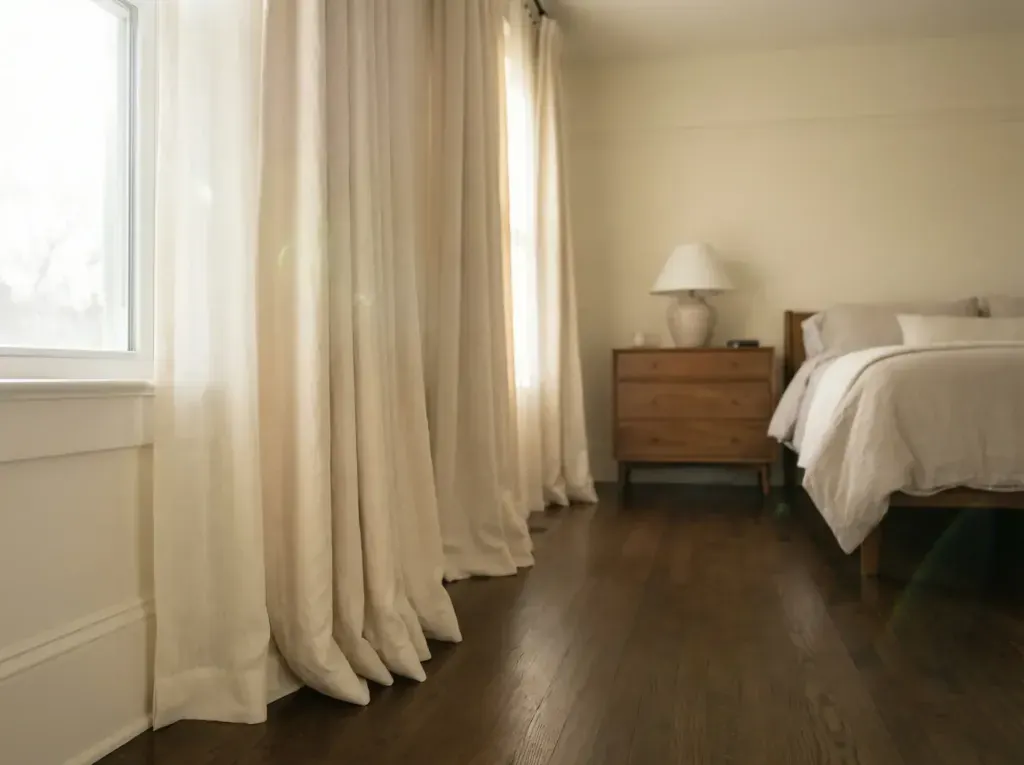 What Custom Drapery Costs in Pittsboro and Why It Varies
 Custom vs Stock Blinds in Pittsboro: What Actually Differs