Privacy Ideas for Pittsboro Bathroom Windows That Still Let in Light
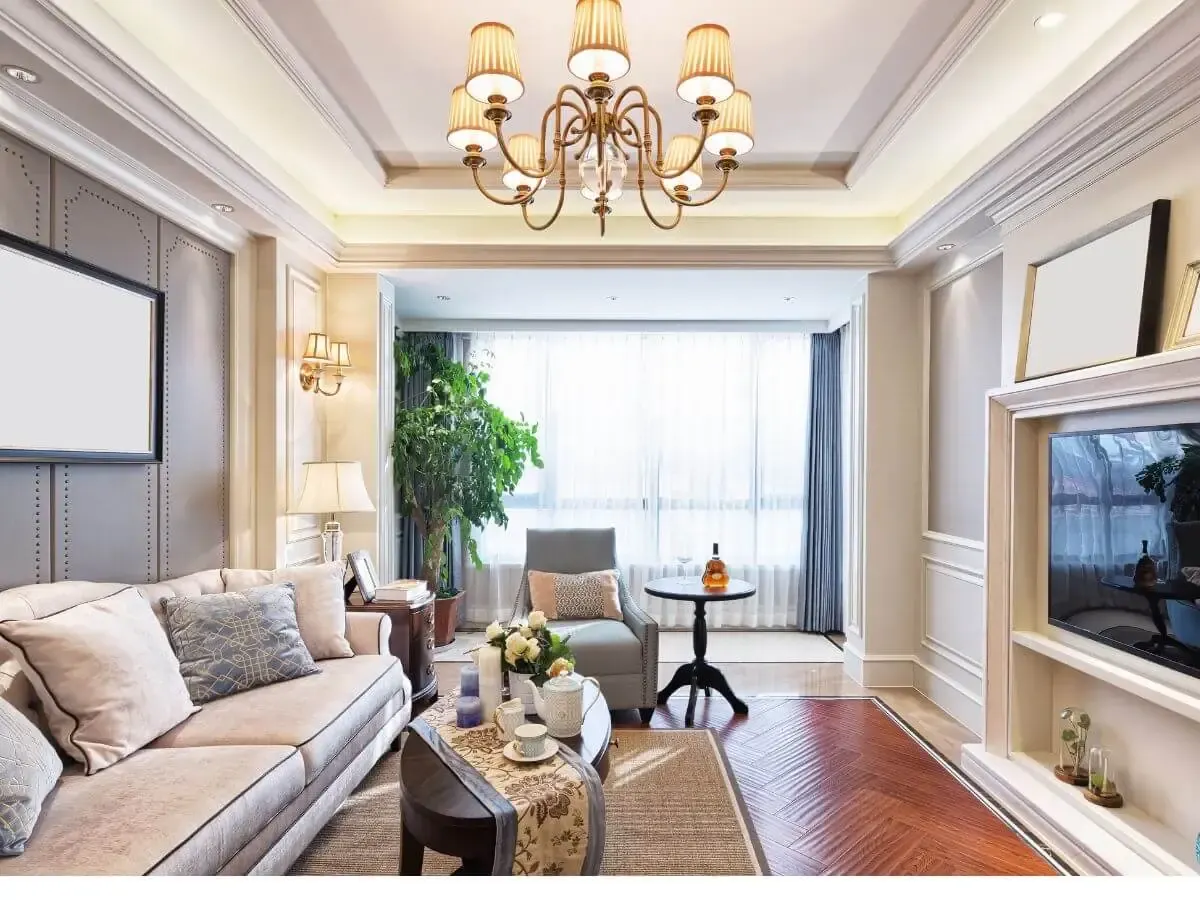
A bathroom window has one job that's harder to solve than it looks: block the view in without turning the room into a cave that needs the lights on at noon.
How Humidity Changes What You Should Hang
A kitchen doesn't hit the same humidity spikes a bathroom does, but it runs warmer and greasier for longer stretches, especially around a stove or a dishwasher venting steam after a cycle. Real wood tolerates a kitchen a bit better than it tolerates a bathroom, but it's still not the best choice directly over a sink or near the range.
Faux wood and vinyl-based roller and cellular shades handle the kitchen's combination of heat and grease better than wood or a heavily textured fabric does, which is why they show up so often in Pittsboro kitchen recommendations over anything meant for a formal dining room instead.
This is also where day-to-day habits matter more than the room's overall humidity level. A kitchen where someone cooks every night sees more grease and steam exposure over a year than a kitchen that mostly handles reheating and coffee, even if both rooms measure about the same on a humidity gauge.
Keeping Grease and Steam From Ruining a Shade
In a kitchen, the window over the sink usually sits close enough to cooking that airborne grease eventually settles on anything nearby, including a fabric shade. Grease and fabric shades don't mix well over time, since grease attracts dust and the combination is genuinely hard to clean out of a woven texture.
Steam does something similar in a bathroom, less about grease and more about moisture settling into fabric fibers and, if it happens often enough without good ventilation, encouraging mildew. A vinyl-faced or PVC-based shade wipes clean with a damp cloth in both rooms, which is most of why they turn up so often in kitchen and bathroom recommendations over anything with a soft, absorbent texture.
Getting Privacy Without Losing the Light
Material affects privacy just as much as the shade's operating style does. A tightly woven solar or light-filtering fabric blocks a direct sightline while still passing enough light through to avoid a dark room, while a loosely woven fabric can let more shape and movement through than expected, especially once it's lit from behind at night.
Frosted vinyl and certain cellular fabrics marketed specifically for bathrooms are built with a denser weave or an opaque backing for exactly this reason, privacy during both day and night rather than only one or the other, which matters more in a bathroom than in almost any other room in the house.
This is where a lot of homeowners end up choosing differently for the two rooms even within the same house. A kitchen window might get a simple light-filtering roller since privacy matters less there, while the bathroom next door gets the denser, purpose-built privacy fabric instead, and that split usually makes more sense than picking one material for both rooms out of convenience.
Hardware That Doesn't Rust or Swell
Whatever privacy solution gets chosen, the hardware holding it in place needs to survive the same steam exposure the fabric does. A top-down bottom-up mechanism has more moving parts than a basic roller, which means more metal components exposed to humidity over time.
Stainless steel components and sealed housings handle that exposure without seizing up or rusting, which matters more on a mechanism with moving parts than it does on a simple bracket. Confirming this at the time of ordering saves a Pittsboro homeowner from a shade that looks great for a year and then starts sticking.
Even a well-chosen mechanism benefits from an occasional check, especially in the first year. A quick look to confirm nothing's binding or sticking catches a developing problem while it's still a five-minute adjustment instead of a full hardware replacement down the road.
Material is easier to judge in person than from a swatch card. A free in-home measure from Pittsboro Window Treatments lets you see and feel the actual faux wood and fabric options against your own bathroom or kitchen light before committing to anything.
The Trouble With Windows Over a Sink or Tub
The window closest to the water source fails fastest, which makes sense once you think about it: it's the one getting hit with the most direct steam and the occasional splash. A wood blind over a tub often shows warping years before an identical blind elsewhere in the same bathroom on a window farther from the shower.
This is also where reach makes a bad situation worse. A blind that's started sticking or warping over a tub is harder to fix or even inspect closely, since climbing into the tub to mess with it isn't something most people want to do, so a developing problem in that spot often goes unaddressed longer than it would anywhere else.
Retrofitting isn't always possible either. A kitchen island window or an unusually shaped bathroom opening sometimes has hardware that simply doesn't have a motorized or cordless equivalent available, in which case the more realistic path is a full product swap rather than trying to save the existing mechanism.
Frequently Asked Questions
My wood blinds are already warped. Can they be fixed or do I need new ones?
Once a wood slat has actually warped or cupped, that's a shape change in the material itself and it doesn't reverse with cleaning or adjustment. If it's one or two slats out of many, sometimes individual slats can be swapped, but if the warping is spread across the blind, replacement is the more realistic option. It's also worth switching material at that point rather than putting real wood back in the same spot.
What's the best material for a small bathroom window that's hard to reach?
Cordless faux wood or a cordless vinyl-faced roller shade both work well here, since neither needs a cord you'd have to reach across a tub or vanity to grab. Motorized versions solve the reach problem entirely if the window is truly awkward to get to, running on a small battery-powered motor controlled by a remote or a wall switch instead of anything you'd need to touch by hand.
Should the kitchen and bathroom windows in the same house match each other?
They don't have to, and in practice they often shouldn't, since a kitchen window usually wants more daily-use durability and easy operation while a bathroom window prioritizes privacy and moisture resistance above all else. Matching the general style, like staying with a similar white or neutral color across both, keeps the house looking cohesive without forcing the same product into two rooms with different actual needs.
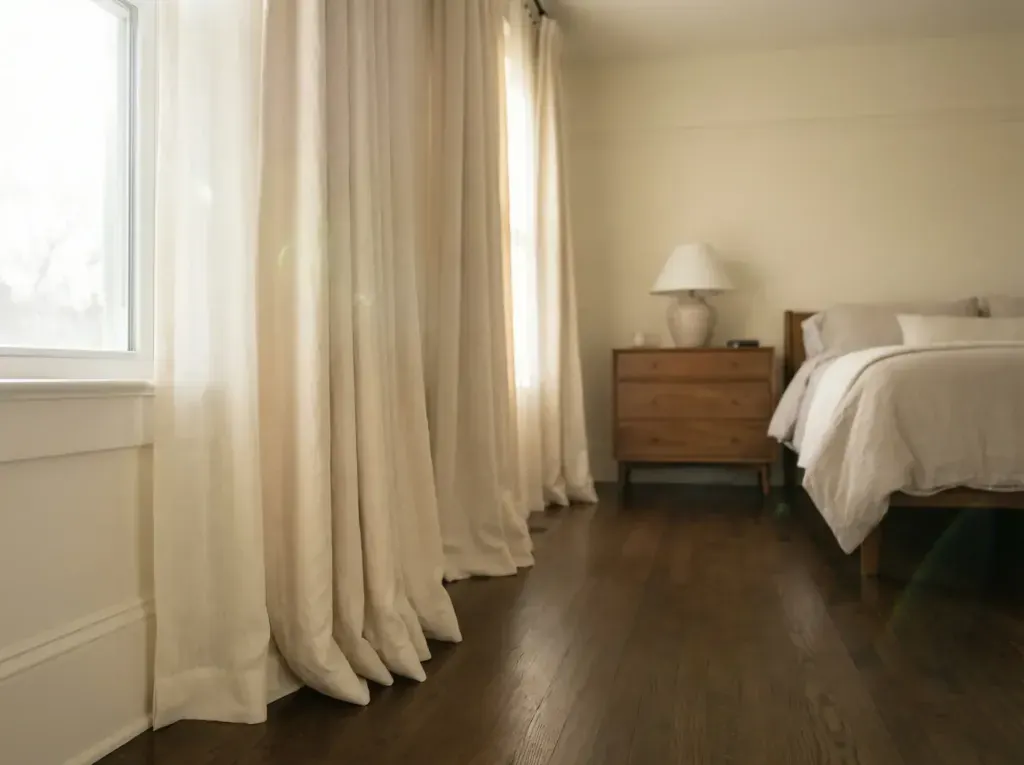 What Custom Drapery Costs in Pittsboro and Why It Varies
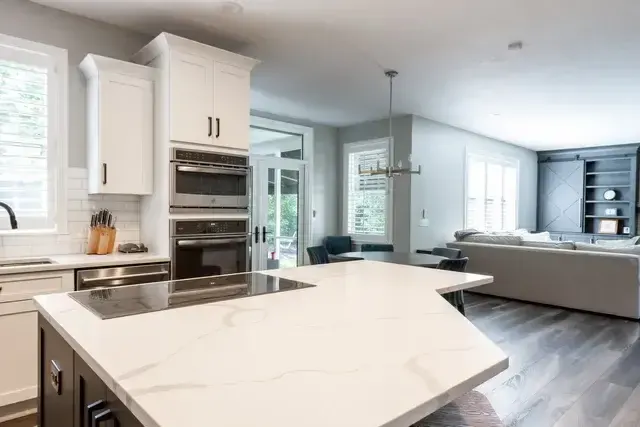 Custom vs Stock Blinds in Pittsboro: What Actually Differs